How to Get to BMO Field (Toronto) for the World Cup: Cross-Border Driving Guide
Jun 16, 2026
Toronto is the only Canadian host city in the 2026 FIFA World Cup, and BMO Field at Exhibition Place is hosting six matches, including Canada’s historic home opener on June 12. For American fans driving north from Buffalo, Detroit, Cleveland, or Chicago, getting to this venue means crossing an international border. That makes this the most preparation-intensive driving journey of any World Cup host city in the series.
The good news is that the most common cross-border route, the Peace Bridge from Buffalo to Fort Erie connecting to the Queen Elizabeth Way (QEW), is a well-established, well-signed corridor that millions of drivers use every year. The roads on the Canadian side are straightforward, toll-free as far as Toronto, and well-maintained. There is, however, one tolled highway that crosses the top of the city: Highway 407 ETR. It is fully electronic, does not accept cash, and is not covered by any U.S. transponder including E-ZPass. It is, however, fully covered by NextPass, making this a great solution from cross-border transportation.
This guide covers every cross-border route, the border crossing process, the toll roads you will encounter on both sides of the border, and the critical parking situation in Toronto on match days.
Quick Facts: BMO Field (Toronto Stadium)
- Address: 170 Princes’ Boulevard, Exhibition Place, Toronto, ON M6K 3C3
- Official FIFA tournament name: Toronto Stadium
- World Cup capacity: 45,736 (expanded from regular 30,000 with temporary stands)
- World Cup matches: 6 (5 group stage, 1 Round of 32)
- Primary driving approach: Gardiner Expressway to Lake Shore Boulevard West
- Parking on match days: NONE. The City of Toronto has confirmed no public parking at Exhibition Place or surrounding neighborhoods including Liberty Village and Fort York.
- Nearest major border crossing (from US): Peace Bridge, Fort Erie (via Buffalo, ~1.5 hrs to stadium)
- Nearest airports: Toronto Pearson International (YYZ, 24 km), Billy Bishop City Airport (YTZ, 5 km)
World Cup 2026 Match Schedule at BMO Field
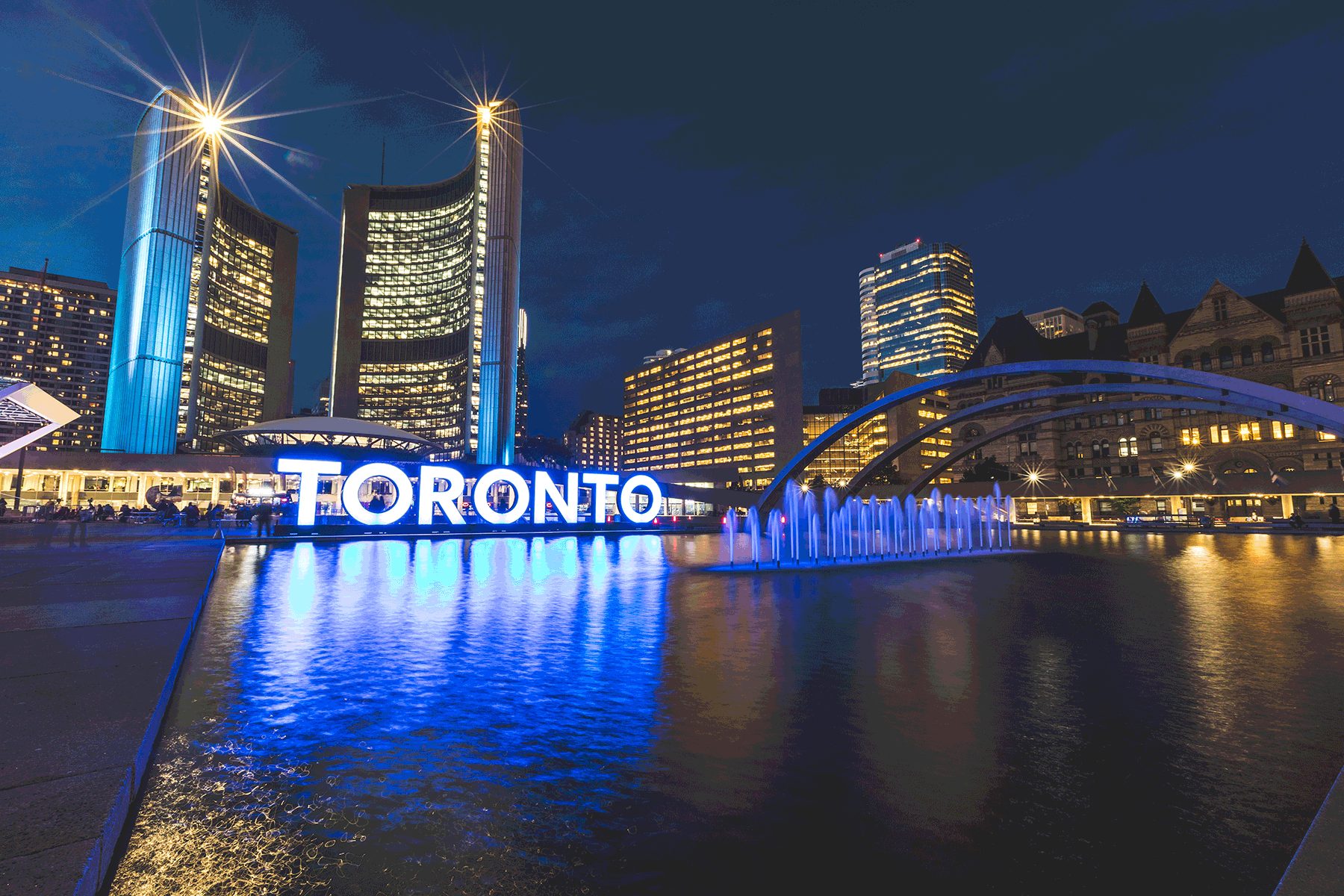
BMO Field hosts six matches from June 12 to July 2. During the tournament, the venue is officially named Toronto Stadium in all FIFA broadcasts, signage, and communications. Canada’s June 12 opener against Bosnia and Herzegovina is the first men’s World Cup match ever played in Toronto, and the atmosphere at Exhibition Place will be unlike anything Canadian soccer has produced. If you are planning to attend this match, it is the highest-demand fixture at this venue and should be treated as a peak-traffic event from the moment you leave home.
| Date | Match | Kickoff (ET) | Round | Stadium Name |
| Fri Jun 12 | Canada vs. Bosnia and Herzegovina | 3:00 PM | Group Stage | Toronto Stadium |
| Sat Jun 14 | Ghana vs. Panama | TBD | Group Stage | Toronto Stadium |
| Tue Jun 17 | Croatia vs. TBD | TBD | Group Stage | Toronto Stadium |
| Sat Jun 20 | Germany vs. Cote d’Ivoire | 1:00 PM | Group Stage | Toronto Stadium |
| Tue Jun 23 | TBD vs. TBD (Group I/L) | TBD | Group Stage | Toronto Stadium |
| Thu Jul 2 | TBD vs. TBD | TBD | Round of 32 | Toronto Stadium |
Note: Canada’s Group B opener on June 12 is the second match of the entire 2026 World Cup (the tournament opens the previous day in Mexico City). The Germany vs. Cote d’Ivoire match on June 20 is the highest-profile neutral fixture at this venue. The Round of 32 on July 2 is the final Toronto match. For border crossing planning, the June 12 opener and the June 20 Germany match will see the heaviest inbound cross-border traffic.
Crossing the Border: What You Need to Know Before You Drive
Crossing from the United States into Canada is a routine process for millions of travelers every year, but the World Cup will increase both the volume of crossings and the scrutiny applied by Canada Border Services Agency (CBSA) officers. The single most important thing to understand before you leave is this: a World Cup ticket is not a ticket into Canada. You must meet Canada’s entry requirements independently of your match ticket.
Documents required at the Canadian border
Every traveler entering Canada, regardless of age, must carry acceptable identification. The CBSA’s official guidance for World Cup 2026 is clear on this point.
- US citizens crossing by land: Valid US passport, US passport card, NEXUS card, or another accepted Western Hemisphere Travel Initiative (WHTI) document. A passport book is the most universally accepted option and is strongly recommended.
- Non-US international visitors driving from the US: A valid passport plus any required Canadian visa or Electronic Travel Authorization (eTA). Check entry requirements for your specific nationality at canada.ca before travelling.
- There is no special FIFA visa. A World Cup ticket does not grant entry and does not replace any required travel document.
- NEXUS card holders: The Whirlpool Bridge between Niagara Falls, NY and Niagara Falls, ON is open to NEXUS members only (7:00 AM to 11:00 PM, seven days a week) and typically has shorter wait times than the Peace Bridge.
Border crossing wait times on match days
The CBSA officially advises fans attending World Cup matches to check border wait times before departure and to consider alternative crossing points when one port of entry is backed up. For the Niagara region specifically, four crossings operate 24 hours a day, seven days a week:
- Peace Bridge (Fort Erie): The primary and most direct crossing for Toronto-bound traffic. Drops onto the QEW immediately and is the recommended crossing for fans heading to BMO Field. On match days, expect longer than normal queues.
- Queenstown-Lewiston Bridge (Niagara-on-the-Lake): North of Niagara Falls. Also connects to the QEW toward Toronto. A good alternative if the Peace Bridge is heavily backed up.
- Rainbow Bridge (Niagara Falls, NY to Niagara Falls, ON): Drops into the tourist area of Niagara Falls and is less direct for Toronto. Useful if you plan to stop in Niagara Falls first.
- Whirlpool Bridge: NEXUS members only. Generally the shortest wait of any Niagara crossing for eligible travelers.
Live border wait times are available at the Canada Border Services Agency website (cbsa-asfc.gc.ca) and at the Niagara Falls Bridge Commission site (niagarafallsbridges.com). Check both before departing on match days, as wait times change by the hour.
What to declare at the border
Canadian border officers will ask you the standard entry questions: purpose of visit, how long you are staying, what goods you are bringing in. A few specific points for World Cup visitors:
- Declare any cash totaling CAD $10,000 or more. There is no restriction on the amount, but you must declare it.
- Certain foods are restricted or prohibited from entering Canada, including some meats, dairy, fruits, and vegetables. Check inspection.canada.ca before packing food for the drive.
- Firearms are heavily restricted. Most handguns are prohibited from import into Canada. Leave all firearms at home.
- ArriveCAN is not required for land border crossings. It is optional for travelers driving into Canada. You do not need to complete ArriveCAN before driving across.
Cross-Border Routes to BMO Field: Quick Reference
The table below covers the primary cross-border driving routes for fans arriving from major US cities. All times are approximate under normal conditions and do not account for match day border crossing delays, which can add 30 to 90 minutes or more at peak times.
| Arriving From (US) | Route to Toronto | Border Crossing | Total Drive to BMO Field |
| Buffalo, NY | I-190 North to Peace Bridge; QEW North to Gardiner/Lake Shore West | Peace Bridge (Fort Erie) | 1.5-2 hrs |
| Niagara Falls, NY | Rainbow Bridge or Lewiston-Queenston Bridge; QEW North | Rainbow or Lewiston-Queenston | 1.5-2 hrs |
| Detroit, MI | I-75 North to Ambassador Bridge or Gordie Howe Bridge; Hwy 401 East | Ambassador or Gordie Howe Bridge (Windsor) | 4-4.5 hrs |
| Chicago, IL | I-90 East to I-190 North to Peace Bridge; QEW North | Peace Bridge (Fort Erie) | 6.5-7 hrs |
| Cleveland, OH | I-90 East to I-190 North to Peace Bridge; QEW North | Peace Bridge (Fort Erie) | 3.5-4 hrs |
| New York City, NY | I-90 West to I-190 North to Peace Bridge; QEW North | Peace Bridge (Fort Erie) | 7-7.5 hrs |
| Port Huron, MI / Sarnia | Blue Water Bridge; Hwy 402 East to Hwy 401 East | Blue Water Bridge (Sarnia) | 3-3.5 hrs from Sarnia |
Border crossing timing tip: For match days, aim to cross the border at least four to five hours before kickoff. This gives you a buffer for unexpected crossing delays and match day traffic in the Greater Toronto Area, and time to park remotely and take GO Transit to the stadium (see parking section below).
Route Details: Getting to BMO Field
From Buffalo, NY via the Peace Bridge (1.5 to 2 hours in normal traffic)
Buffalo is the closest major US city to Toronto and the most common cross-border entry point for World Cup fans. Take I-190 North from downtown Buffalo or the Buffalo Niagara airport to the Peace Bridge (no tolls on I-190 northbound). Cross the Peace Bridge into Fort Erie, Ontario, then follow the QEW North toward Toronto.
The QEW is a free 400-series highway. It runs 139 kilometers from Fort Erie through Niagara Falls, St. Catharines, Hamilton, Burlington, Oakville, and Mississauga into Toronto, where it transitions into the Gardiner Expressway. The Gardiner carries you into downtown Toronto toward Exhibition Place and Lake Shore Boulevard West, the final approach to BMO Field.
Key decision point: at Burlington, the QEW meets Highway 407 ETR. If Highway 427 and the Gardiner are showing heavy congestion, some navigation apps will suggest taking the 407 ETR across the top of the city. The 407 is faster but is a fully electronic toll road. See the toll section below for full details before deciding whether to use it.
From Detroit, MI via the Ambassador Bridge or Gordie Howe Bridge (4 to 4.5 hours)
From Detroit, cross the Ambassador Bridge or the new Gordie Howe International Bridge into Windsor, Ontario. The Gordie Howe Bridge opened in 2026 and connects I-75 directly to Highway 401 without any traffic lights on the Canadian side, making it the recommended crossing for fans coming from downtown Detroit or I-75 south of the city. From Windsor, take Highway 401 East all the way to the Highway 427 interchange near Toronto, then Highway 427 South to the Gardiner Expressway East toward Exhibition Place.
Highway 401 is Ontario’s main east-west corridor and is a free highway throughout. It is one of the widest and busiest highways in North America, carrying heavy truck and commuter traffic between Windsor and Toronto. On match days, allow extra time on the 401 approaching the Toronto interchange, where congestion is common from the Highway 400 corridor eastward.
From Cleveland, OH via the Peace Bridge (3.5 to 4 hours)
From Cleveland, take I-90 West to I-190 North in Buffalo, then cross the Peace Bridge into Fort Erie and follow the QEW North to Toronto. The I-90 Ohio Turnpike has toll sections, and the New York State Thruway (I-90 in New York) also has toll segments approaching Buffalo. NextPass covers both. Once in Canada, the QEW to Toronto is free.
From Chicago, IL via the Peace Bridge (6.5 to 7 hours)
From Chicago, take I-90 East through Indiana and across northern Ohio, connecting to I-190 North at Buffalo and crossing the Peace Bridge. The Indiana Toll Road (I-90 in Indiana) and the New York State Thruway (I-90 in New York) are tolled. NextPass covers both. This is a long road trip that strongly favours departing the day before a match and staying overnight near Buffalo or in the Greater Toronto Area.
From New York City, NY via the Peace Bridge (7 to 7.5 hours)
From New York City, take I-90 West (New York State Thruway) all the way to I-190 North at Buffalo, then cross the Peace Bridge. The Thruway is heavily tolled throughout New York State. NextPass covers this corridor. This is a long one-day drive and, like Chicago, is best handled with an overnight stop.
From Port Huron / Sarnia via the Blue Water Bridge (3 to 3.5 hours from Sarnia)
For fans coming from Michigan outside of Detroit, the Blue Water Bridge at Port Huron / Sarnia is an alternative crossing. From Sarnia, take Highway 402 East connecting to Highway 401 East toward Toronto. This approach avoids the congestion of the Windsor-Detroit corridor entirely and is worth considering for fans coming from mid-Michigan or the I-69 corridor.
Toll Roads on the Cross-Border Drive: Full Reference
This is the only guide in the series covering toll roads in two countries. The table below maps every tolled road and crossing you may encounter on the journey from the US to BMO Field, with payment methods and key notes for each.
| Road / Crossing | Country | Payment Method | Notes |
| I-190 (Buffalo to Peace Bridge) | USA | NextPass / E-ZPass | Non-tolled. I-190 has no tolls between I-90 and the Peace Bridge. |
| Peace Bridge (Fort Erie) | USA/Canada | Cash / card / NEXUS | Bridge toll approx. $4.25 USD southbound only. No toll northbound into Canada. |
| QEW (Fort Erie to Toronto) | Canada | Free | QEW is a non-tolled 400-series highway. No toll at any point. |
| Highway 407 ETR | Canada | NextPass / 407 transponder / plate billing | Fully electronic, no cash. NextPass covers 407 ETR. Plate billing available but more expensive. |
| Hwy 412 / 418 (407 spurs) | Canada | 407 ETR transponder / plate billing | Eastern 407 connector routes. NextPass coverage: confirm before use. |
| Gardiner Expressway (Toronto) | Canada | Free | Non-tolled urban expressway into downtown Toronto. |
| Ambassador Bridge (Detroit-Windsor) | USA/Canada | Cash / card (USD) | Toll approx. $6.75 USD one way. No transponder program. |
| Gordie Howe Bridge (Detroit-Windsor) | USA/Canada | Cash / card | New in 2026. Direct I-75 to Hwy 401 connection. Toll rates TBC at time of writing. |
| Blue Water Bridge (Sarnia) | USA/Canada | Cash / card / NEXUS | Toll approx. $3.75 USD southbound only. No toll northbound into Canada. |
| NY State Thruway (I-90) segments | USA | NextPass / E-ZPass | Tolled sections on I-90 approaching Buffalo from the east or west. |
Key takeaway: The QEW and Highway 401 (both free) carry you from the border all the way to Toronto without any toll roads. The only Canadian toll road you are likely to encounter is Highway 407 ETR if you choose to use it as an alternate route around the city. US toll segments are on I-90 approaching Buffalo, which NextPass covers.
Highway 407 ETR: What US Drivers Need to Know
Highway 407 ETR deserves its own section because it is the one road on the Canadian side of this journey that can surprise US drivers.
The 407 is a fully electronic express toll highway running east to west across the top of the Greater Toronto Area, roughly parallel to and north of Highway 401. It is extremely well-maintained, generally less congested than the 401, and offers a faster alternative route around the city when 401 or Gardiner congestion is severe.
However, it has no cash lanes, no toll booths, and does not accept E-ZPass, TxTag, or any US transponder. It bills exclusively through NextPass, 407 transponder or license plate. If you drive the 407 without any account registered, cameras photograph your plate, and a bill is mailed to the vehicle’s registered owner. For rental cars, this goes to the rental company with additional fees. Plate billing on the 407 is also significantly more expensive than transponder rates.
NextPass covers Highway 407 ETR. Register your license plate in the NextPass app before your trip and the 407 is billed automatically at the standard plate rate. This is the simplest option for US drivers driving into Toronto who do not want to set up a separate 407 ETR account. Please note, NextPass only personal cars for tolls on Highway 407 ETR. It doe not cover rental cars.
Highway 407 ETR: Key facts for US drivers
- Location: East-west highway across the top of the Greater Toronto Area
- Toll type: Fully electronic, no cash, no booths
- US transponders accepted: None. E-ZPass, TxTag, and FasTrak do not work on the 407.
- Payment options: NextPass account (license plate billing), 407 ETR transponder (requires a 407 account), or unregistered plate billing (most expensive option, bill mailed to vehicle owner)
- Is it worth using? For fans staying north of the city (Mississauga, Brampton, North York), the 407 can save significant time over Highway 401. For fans going directly to downtown Toronto and BMO Field, the Gardiner Expressway approach from the west via the QEW is more direct.
- Approximate cost: Varies by time of day and entry/exit points. A typical cross-GTA trip ranges from CAD $15 to CAD $45 or more at plate billing rates.
Parking at BMO Field: A Critical Note
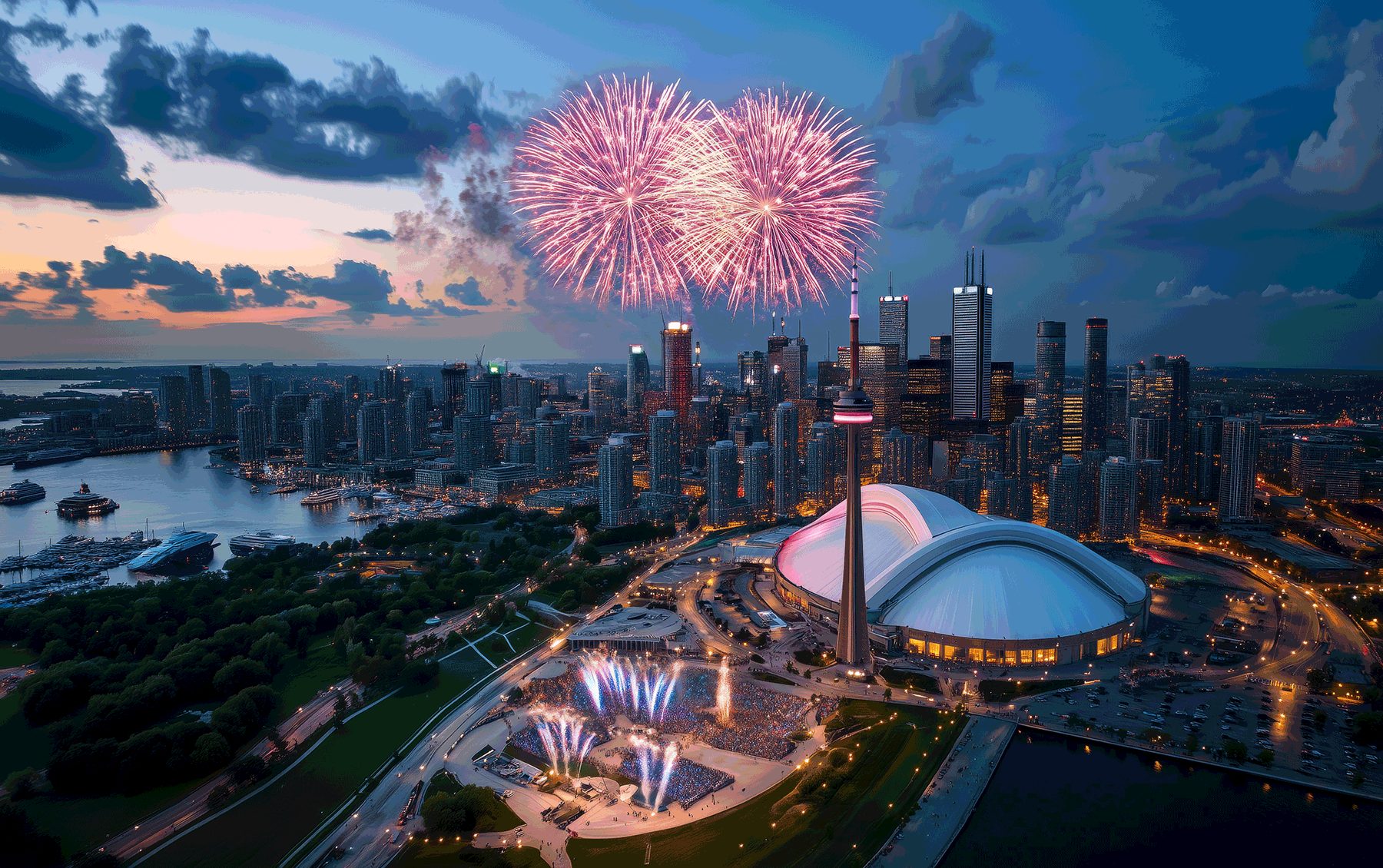
This is the most important section of this guide for drivers. The City of Toronto has officially confirmed that there will be NO public parking at Exhibition Place, Toronto Stadium, or surrounding neighborhoods including Liberty Village and Fort York on World Cup match days. This is not a recommendation to use transit. It is an official prohibition on public parking in the stadium precinct.
This means that driving directly to BMO Field on match day and parking nearby is not an option. For fans driving from the US, the practical strategy is to drive into the Greater Toronto Area and park at a GO Transit station outside the downtown core, then take GO Train to Exhibition GO Station, which is steps from the stadium gates.
- Recommended strategy for cross-border drivers: Drive to a GO station in Mississauga, Oakville, Hamilton, or Burlington. Park at the station (most GO stations have free or low-cost parking). Take the GO Lakeshore West line to Exhibition GO Station, which is directly adjacent to BMO Field. Journey time from Oakville to Exhibition GO Station is approximately 35 to 45 minutes.
- If you are staying in the Greater Toronto Area, pre-book a hotel or accommodation with parking near a GO or subway station. The GO Lakeshore West line from Mississauga and Hamilton is confirmed as an enhanced World Cup service route.
- Pre-booked private parking in the CNE grounds (the Exhibition Place event parking) may be available through parking apps for some match days. Check apps such as ParkWhiz or SpotHero closer to match dates. This parking will be limited and priced at event rates.
- The City of Toronto expects downtown traffic to increase 10 to 15 percent above normal on match days. Do not plan to park downtown and walk or rideshare to the stadium.
A Note on Transit to BMO Field
BMO Field has some of the best transit access of any World Cup venue in the tournament. Exhibition GO Station is directly outside the stadium gates and is served by the GO Lakeshore West line. The TTC 509 Harbourfront and 511 Bathurst Streetcars also stop at Exhibition Loop, steps from the stadium. Union Station is under 10 minutes by GO Train.
For cross-border drivers, the recommended approach is to drive to a GO station outside the city and take GO Transit for the final leg. This eliminates the parking problem entirely and makes the journey into the stadium faster and less stressful than driving through downtown Toronto. Enhanced GO Train service is confirmed for all six BMO Field match days.
Toll and Travel Tips for Cross-Border World Cup Drivers
- Set up NextPass before you leave home. The app covers US toll roads on your approach (NY State Thruway, Indiana Toll Road) and Highway 407 ETR in Canada. One app, both countries.
- Do not rely on E-ZPass for the Canadian leg. E-ZPass is not accepted at any Canadian toll point including Highway 407 ETR.
- Check border crossing wait times the morning of your match day at cbsa-asfc.gc.ca. Be prepared to switch crossings if one is significantly backed up. The Peace Bridge and Queenstown-Lewiston Bridge are both direct QEW connections.
- Carry your passport. Every traveler including children requires acceptable ID at the Canadian border. A World Cup ticket is not an entry document.
- Plan to park at a GO station outside downtown Toronto. There is no public parking at BMO Field or Exhibition Place on match days. This is not optional.
- The QEW from the Peace Bridge to Toronto is free. You do not need a toll account for the Canadian side of your drive unless you choose to use Highway 407 ETR.
- For US toll roads on the approach (I-90 / NY Thruway from NYC or Cleveland, Indiana Toll Road from Chicago), NextPass handles billing automatically. No cash, no stopping.
- Allow four to five hours before kickoff for your border crossing window, particularly for the June 12 Canada opener and the June 20 Germany match, which will generate the highest cross-border travel volume of any Toronto fixture.
Frequently Asked Questions
Do I need a visa to drive from the US to Canada for the World Cup?
US citizens do not need a visa to enter Canada. You need a valid US passport, passport card, NEXUS card, or another accepted WHTI travel document. Non-US nationals driving from the US may need a Canadian visa or Electronic Travel Authorization (eTA) depending on their nationality. There is no special FIFA visa. A World Cup match ticket is not an entry document and does not replace any required travel ID.
What is the best border crossing from the US to Toronto for the World Cup?
For most fans driving from Buffalo or from the east, the Peace Bridge (Fort Erie, Ontario) is the most direct crossing for Toronto. It connects immediately to the QEW, which takes you to the city without tolls. For NEXUS card holders, the Whirlpool Bridge in Niagara Falls typically has shorter wait times. Fans driving from Detroit should use the new Gordie Howe International Bridge or the Ambassador Bridge into Windsor, then Highway 401 East to Toronto.
Is the QEW a toll road?
No. The Queen Elizabeth Way (QEW) is a free 400-series highway in Ontario. There are no tolls at any point on the QEW from the Peace Bridge in Fort Erie to the Gardiner Expressway in Toronto. The Gardiner Expressway (the urban extension of the QEW into downtown Toronto) is also free.
Does E-ZPass work in Canada?
No. E-ZPass is not accepted at any Canadian toll point. US transponders including E-ZPass, TxTag, and FasTrak do not work on Highway 407 ETR or any other Canadian toll road. For the 407 ETR, you need either a NextPass account, which covers Highway 407 ETR and is registered to your plate before your trip or a 407 ETR transponder account.
Is there parking at BMO Field for the World Cup?
No. The City of Toronto has officially confirmed that there is no public parking at Exhibition Place, Toronto Stadium (BMO Field), or surrounding neighborhoods including Liberty Village and Fort York on World Cup match days. Cross-border drivers should plan to park at a GO Transit station outside downtown Toronto (Mississauga, Oakville, Burlington, or Hamilton are all practical options) and take the GO Lakeshore West line to Exhibition GO Station, which is directly adjacent to the stadium.
How long does it take to drive from Buffalo to BMO Field in Toronto?
Under normal conditions, the drive from downtown Buffalo to BMO Field is approximately 1.5 to 2 hours, including the Peace Bridge crossing. On World Cup match days for high-demand fixtures, add 30 to 90 minutes for border crossing queues and match day traffic approaching Toronto. Aim to cross the border at least four hours before kickoff.
What is BMO Field called during the World Cup?
BMO Field is officially renamed Toronto Stadium during the 2026 FIFA World Cup under FIFA’s venue naming policy. All FIFA communications, broadcasts, and stadium signage use the name Toronto Stadium. When searching for match day information, use both BMO Field and Toronto Stadium to find all relevant content.